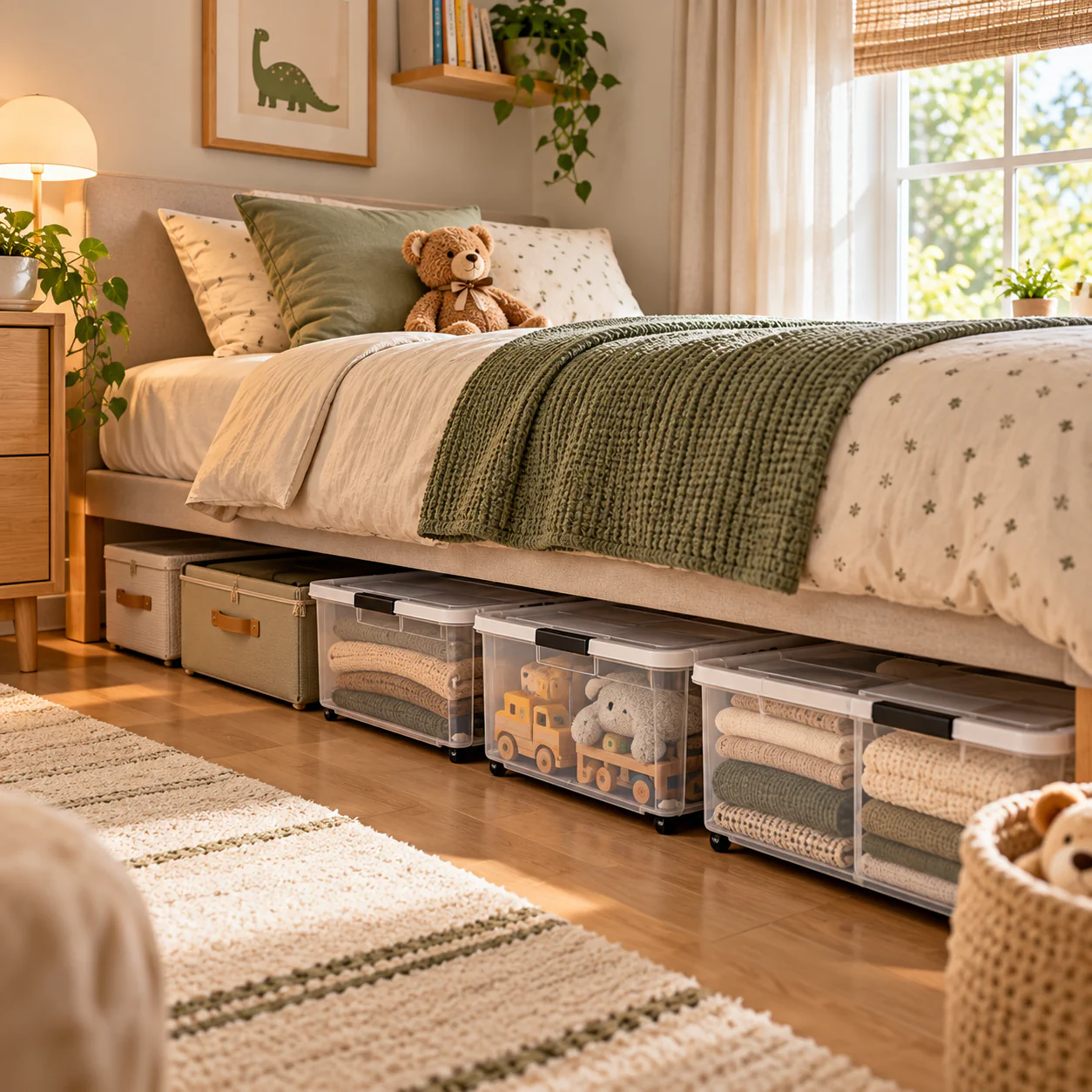
Organizing cleaning supplies in a small home is less about finding one perfect cabinet and more about building a safe, repeatable system. Put the products used for a task near the place where that task happens, keep reserve stock out of the way, and make hazardous chemicals inaccessible to children and pets. The goal is a clear route, a quick reset, and no guessing about what is in a bottle.
This guide is for renters and homeowners working with small kitchens, bathrooms, laundry areas, entry closets, and shared utility cupboards. It does not replace a product label, a safety data sheet, poison-control advice, or local disposal rules.
The short answer
Use four storage layers:
- Point-of-use supplies: one small caddy or tray for the room you clean most often.
- Locked chemical storage: bleach, disinfectants, drain openers, oven cleaners, laundry packets, and other hazardous products in a locked cabinet or box, out of sight and reach of children and pets.
- Reserve stock: unopened refills grouped together, but not piled so high that bottles fall when one is removed.
- A reset zone: one place for the empty caddy, reusable cloths, gloves, and items that need to dry.
The exact cabinet matters less than the separation between daily-use tools, concentrated chemicals, and unopened refills.
1. Inventory before buying organizers
Take everything out of the current cupboard and make four groups:
| Group | Examples | Best next step |
|---|---|---|
| Daily surface care | Dish soap, all-purpose cleaner, microfiber cloths | Keep a small active set near the point of use |
| Bathroom or floor care | Toilet cleaner, floor cleaner, scrub brush | Store near that room only if the location is secure |
| Concentrated or corrosive products | Drain opener, oven cleaner, strong disinfectant | Lock away; follow the product label |
| Reserve and seasonal stock | Unopened refills, spare gloves, extra sponges | Keep together in a dry, less accessible zone |
Check every label, cap, and expiry instruction while sorting. If a container is leaking, damaged, unlabeled, or no longer needed, do not pour it into another bottle. Keep it isolated and follow the manufacturer or local waste authority's disposal directions.
Before you measure a bin, measure the real constraints: door swing, shelf depth, plumbing, ventilation, electrical outlets, and the clear route in front of the cabinet. Mark the footprint with painter's tape for a day. If the open door or pulled-out bin blocks a toilet, washer, exit, or cooking route, the organizer is too deep for that location.
2. Create a point-of-use caddy
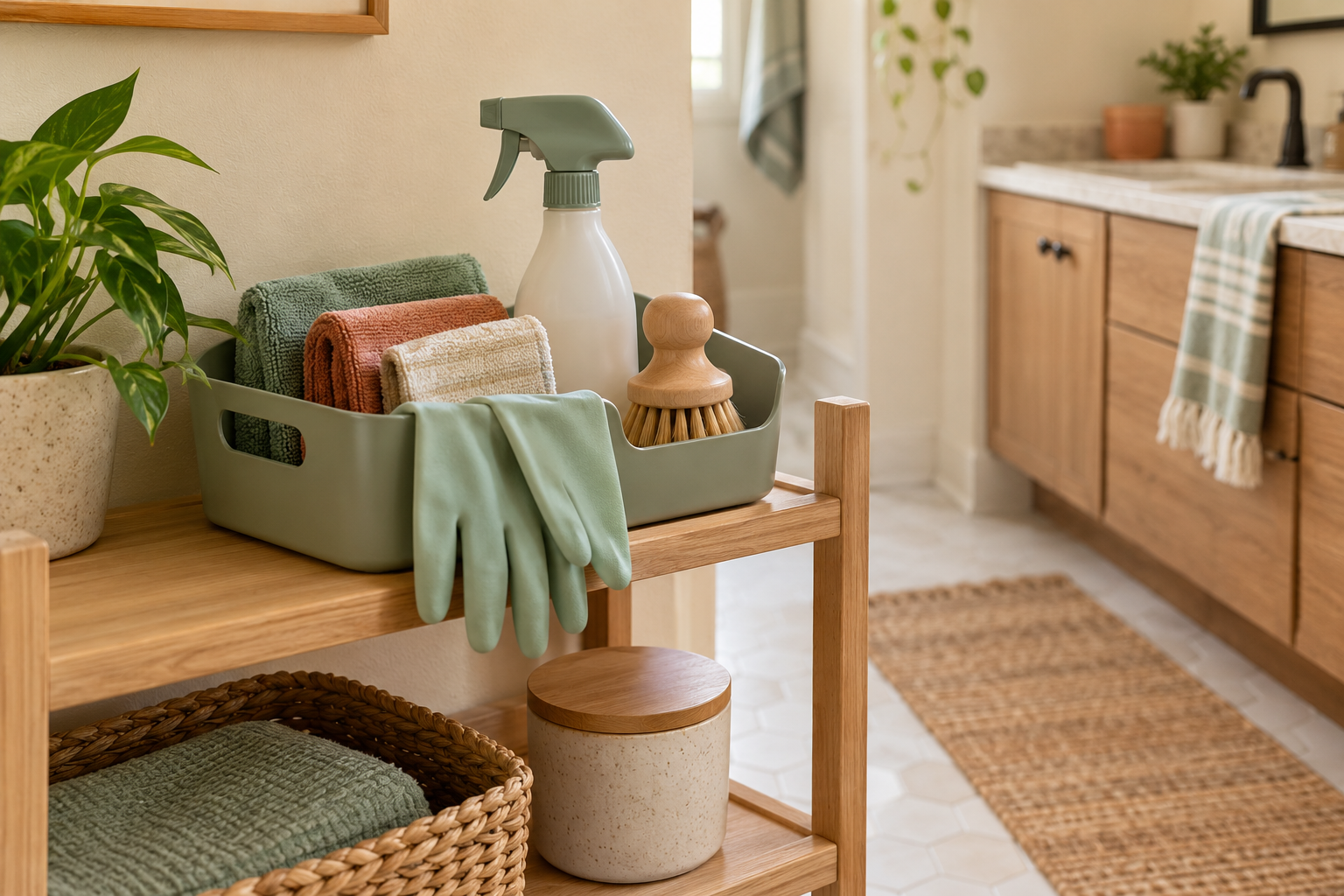
A caddy works when it carries only the active kit. Start with the surfaces in one room, then add the smallest set of tools that completes that task: a suitable cleaner, cloths, a brush, gloves if the label calls for them, and a small place for used cloths to dry.
Do not treat a caddy as a safe place for every chemical. A portable basket can be easy for a child to pull down, and it can also spread a spill from one room to another. Keep hazardous products in the locked storage layer; move only what the label and your household safety routine allow while an adult is actively cleaning.
For a small home, use one caddy per frequent task rather than one deep box for the whole house. A shallow tray is easier to see into and less likely to turn into a forgotten pile. Keep handles clear, leave room to close the cabinet, and avoid stacking bottles on top of one another.
3. Separate daily tools from chemicals
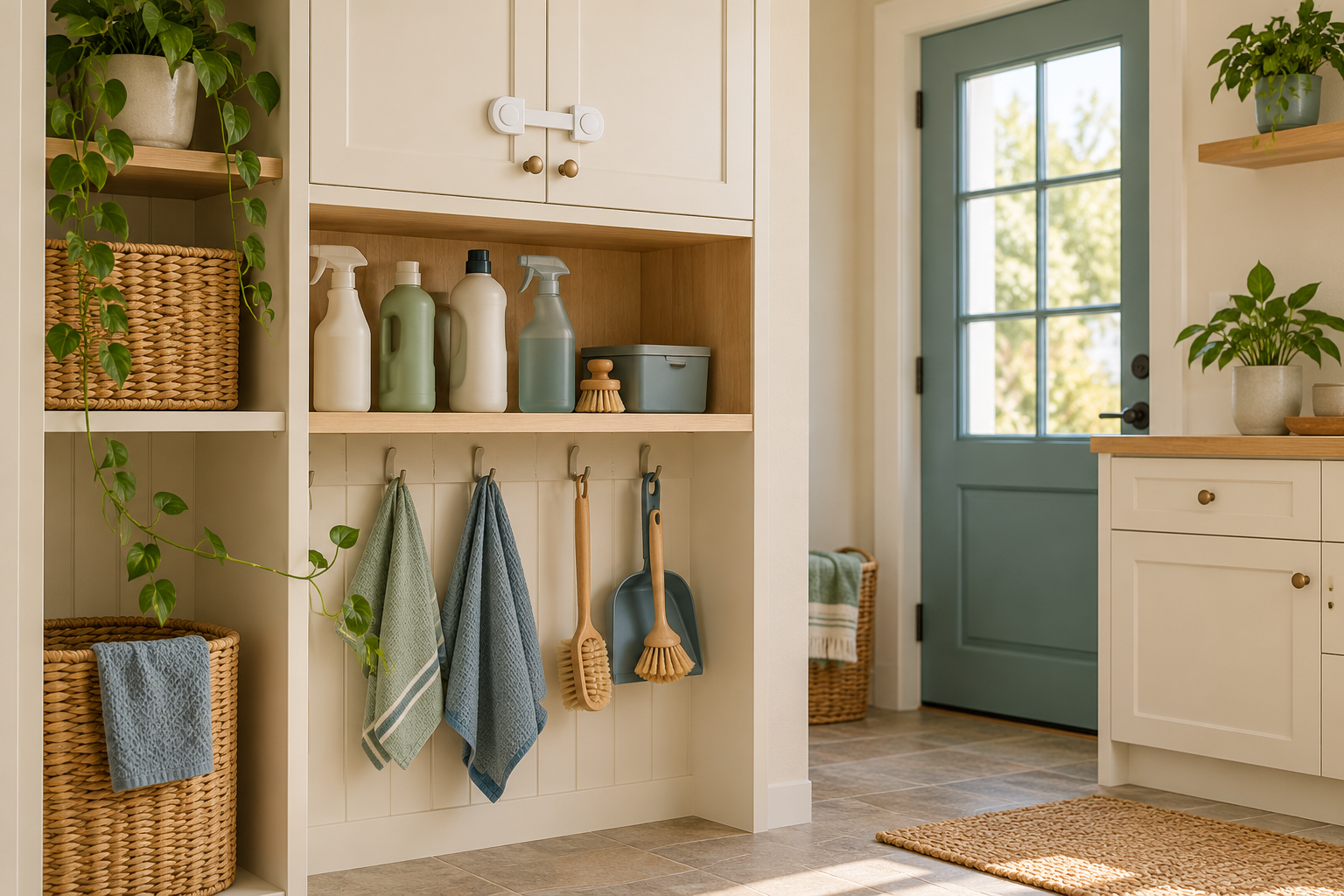
Cleaning tools and chemical products need different storage logic. Cloths, brushes, and a squeegee need airflow so they can dry. Bottles need stable shelves, intact caps, and labels that remain readable. Do not store liquids above food, dishes, medication, or children's belongings.
In a kitchen, a high shelf is not automatically safe if a child can climb onto a counter or chair. In a bathroom, a cabinet under the sink is not automatically secure if the door has no lock and the room is accessible. CPSC poison-prevention guidance says household cleaning supplies should be locked away, kept out of children's sight and reach, and kept in their original child-resistant containers.
If the home includes pets, apply the same reach test to animals that can open doors, knock over bottles, or reach a low shelf. A latch, locked box, or genuinely inaccessible cabinet is more dependable than a warning label alone.
4. Keep products in their original containers
Never transfer a cleaner to a food, drink, or unmarked spray bottle. The original container carries the product name, directions, warnings, first-aid information, and disposal instructions. The National Capital Poison Center specifically warns against moving cleaners into food or soda containers and recommends keeping products in their original containers.
If a diluted product is permitted by its label, label the new container with the product name, dilution, date, and key warning. Store it as carefully as the concentrate. The CDC also recommends labeling diluted cleaning or disinfectant solutions and following the label for contact time, protective equipment, and disposal.
Use a simple visual system, not homemade symbols that could be mistaken for a product claim:
- one label color for daily surface care;
- one for laundry;
- one for bathroom or floor care;
- a separate locked area for concentrated or corrosive products.
Labels organize the shelf; they do not make a product safer or child-resistant.
5. Do not mix products
The most important rule is simple: do not mix cleaning products unless the product label explicitly instructs you to do so. Never mix bleach with ammonia or with an acid-containing cleaner. CDC home-cleaning guidance says not to mix products or chemicals, and its bleach guidance explains that mixing can release dangerous vapors.
For routine home cleaning, clean first with soap, detergent, water, and scrubbing. Disinfect only when the situation calls for it, such as when someone is sick or a household member is at higher risk, and use an EPA-registered product according to its label. Keep the surface wet for the stated contact time; wiping immediately can make the product less effective.
When using a product indoors, follow the label for ventilation and protective equipment. Open windows or use an exhaust fan when appropriate, and keep children and pets away from the work area. If fumes, eye irritation, breathing trouble, or a splash occur, stop, move to fresh air, and contact local emergency or poison-control services for the situation.
6. Design the reserve shelf for visibility
Reserve stock should be visible without becoming a tower. Keep unopened refills together in a low, stable bin or on a shelf with a front stop. Put older products where they will be used first, but never use a product past a label-specific expiry or discard date without checking the manufacturer.
Leave a little empty space around bottles so a leak can be noticed. Avoid storing products in direct heat, dampness, or a place where a leaking bottle can run into an outlet, food, pet bowl, or drain. Keep caps closed and wipe the outside of a bottle before returning it to storage.
For very small homes, reserve stock can live in a high, locked closet outside the kitchen or bathroom. The daily caddy can stay small because it is replenished from this reserve rather than overloaded.
7. Make cloths and tools dry safely
Wet cloths and brushes are a different problem from chemical storage. Give them a ventilated place to dry, away from clean towels, food-preparation surfaces, and children's play areas. A shallow wall rail, open hook, or removable drying bar can work for renters when it does not block a door or route.
Do not seal damp cloths in a closed caddy. Empty the caddy after cleaning, rinse tools as directed, and let them dry before storing. Replace worn sponges and cloths when they no longer clean effectively or cannot be washed according to their care instructions.
8. Build a five-minute reset
The reset should take only a few actions:
- Close every cap and return hazardous products to the locked cabinet.
- Put daily tools back in the caddy and move used cloths to the drying point.
- Wipe a wet shelf or spill immediately, using the product label for cleanup instructions.
- Return the caddy so it does not narrow the walking route or block a door.
- Check that no bottle, packet, or cloth is left within a child's or pet's reach.
Test this routine for one week. If the same bottle is always left on the floor or a door repeatedly collides with the caddy, change the location rather than buying a larger organizer. The AptNook guide to hidden storage can help when a home needs concealed storage without losing visibility.
What to measure before choosing storage
Measure the closed and working states, not only the shelf width:
| Check | Why it matters |
|---|---|
| Interior width and depth | Confirms bottles stand upright without pressing against the door |
| Door or drawer opening | Prevents a bin from blocking the cabinet or a nearby route |
| Clear floor in front | Leaves room to kneel, carry a bucket, or move past safely |
| Shelf load and fixing | Prevents a tall or wall-mounted unit from becoming unstable |
| Ventilation and moisture | Helps tools dry and keeps products in the conditions stated on the label |
| Lock or child-resistant closure | Reduces access risk; a high shelf alone may not be enough |
For a broader vertical-storage approach, see the AptNook vertical storage system guide. For a small-room layout, keep the cleaning route separate from the small entryway organization guide so a caddy does not become a trip hazard.
Research limits and sources
This article is a layout and organization guide, not a chemical-use test. Product formulas, labels, child-resistant closures, and disposal rules vary by product and location. The article's safety points were checked against CDC home-cleaning guidance, CDC bleach guidance, CPSC cleaner-storage and poison-prevention guidance, and National Capital Poison Center cleaner-storage tips. Consult the product label, local authorities, or poison-control service for a specific product or exposure.
The AptNook takeaway
The best cleaning-supply system is visible enough to maintain, compact enough to leave the route clear, and secure enough to keep hazardous products away from children and pets. Start with the task, store only the active kit at the point of use, keep reserve stock separate, and let the product label control every chemical decision.

David
Head of Editorial — AptNook
David oversees AptNook's editorial workflow, coordinating research, writing, and quality reviews to help readers make informed decisions about space-saving furniture and small-room solutions.