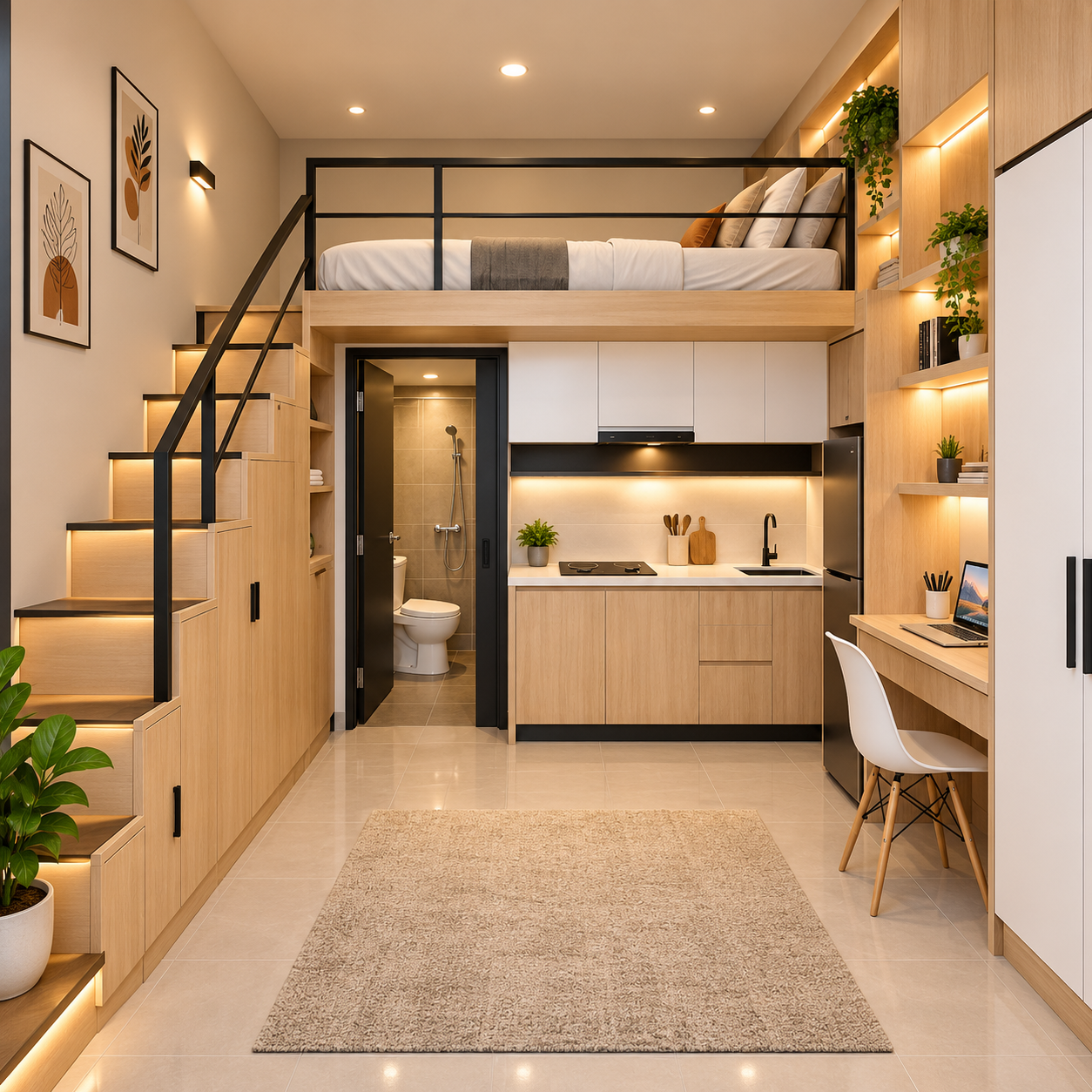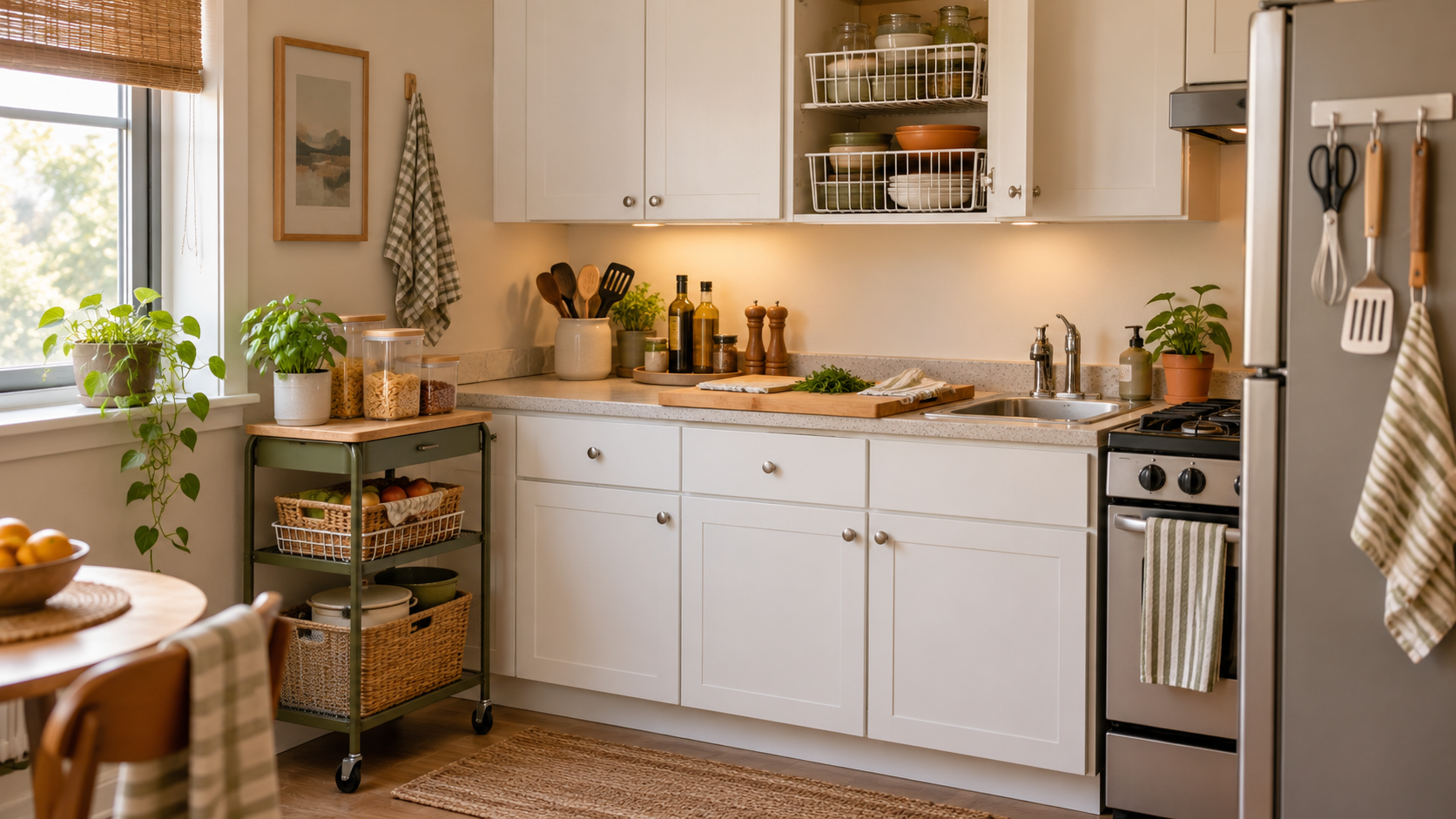
A rental kitchen becomes more functional when one counter section stays available for preparation, everyday tools sit beside the task that uses them, and every added organizer has an instruction-compliant placement or installation plan and a documented removal agreement where permission is required. Start by changing placement, not fixtures. A portable tray, freestanding cart, shelf riser, or approved light can solve a daily problem without pretending that every removable product is automatically allowed.
Use the kitchen for several ordinary meals before buying organizers. Record where groceries stop, where chopping happens, which cabinet forces repeated crossing, and what lands on the counter because its assigned home is inconvenient. Those observations define the upgrade.
Run a one-meal workflow audit
Choose a meal you prepare often and trace five stages:
- Unload: Where do refrigerator, freezer, and pantry items land?
- Wash: Can food move to the sink without crossing a hot cooking zone?
- Prep: Is there one stable, cleanable surface for the cutting board and ingredients?
- Cook: Can utensils, oil, and pans be reached without stepping around an open door?
- Reset: Where do scraps, dishes, leftovers, and cleaning tools go?
Write down each collision: moving the toaster before chopping, carrying spices across the aisle, opening two doors at once, or placing hot cookware beside paper packaging. Fix the repeated action first. AptNook's one-wall and galley kitchen guide can help map the fixed layout; this article focuses on changes a renter can evaluate without rebuilding it.
Sort changes by permission level
Divide ideas before purchasing anything.
Portable changes include countertop trays, drawer dividers, shelf risers, freestanding carts, and freestanding or manufacturer-approved temporary task lights that do not alter fixed wiring or require attachment. They still need stable placement, suitable materials, and enough clearance to operate safely.
Surface-contact changes include adhesive rails, removable film, tension systems, and over-door organizers. These can pull paint, stress cabinet doors, trap moisture, or prevent a door from closing. Read the product's surface restrictions, test only if the instructions permit it, and review responsibility for residue or damage.
Building changes include drilling tile or cabinets, adding shelves, changing a faucet, altering a range hood, moving plumbing, or touching fixed wiring. Ask the landlord or property manager in writing who may do the work, what documentation is required, and how the kitchen must be restored.
Use the rental-upgrade permission guide before treating "peel-and-stick," "no-drill," or "renter-friendly" as approval.
Protect one real prep zone
Choose the longest uninterrupted counter section that is not the stovetop, sink basin, or a door's opening path. Remove objects that do not support preparation. A coffee maker used once each morning may deserve a small station; backup mugs, unopened packages, and seldom-used appliances do not need permanent counter space.
Define the prep zone with one cutting board or washable mat rather than a row of containers. Keep the board where it can lie fully supported. Do not bridge a sink or appliance with a board unless the product is designed and sized for that exact use, remains stable, and does not interfere with the fixture.
Give the zone a short reset: dishes leave, scraps move to the correct bin, the surface is cleaned with a compatible product, and the board returns vertically or to one assigned shelf. A clear counter is useful capacity, not unfinished storage.
Add work surface only when it stays out of the route
A freestanding cart can add prep or landing space when it has a stable base, a surface suitable for the intended task, and a parking position that does not block a refrigerator, oven, cabinet, doorway, vent, or planned exit route. Mark its body and handle projection with painter's tape before buying. Then open every nearby door.
A cart that must move for every meal needs a destination in both working and parked modes. Locking casters help only when the product is designed with them and the floor allows stable use. Do not use a rolling surface for cutting, hot cookware, or a countertop appliance unless the manufacturer allows that use and the cart remains stable under the complete load.
A fold-down surface saves floor area only if the lease permits installation, the wall can accept the specified fasteners, and the open panel leaves standing and chair space. Do not improvise mounting into cabinets, tile, or uncertain wall construction.
Put supplies at the point of use
Organize by action before category:
- knives and cutting boards near the prep zone;
- pans and cooking tools near, but not on, the hot zone;
- plates and glasses near the serving or dish-return route;
- food containers near the surface used for packing leftovers;
- towels and label-compatible cleaning tools near the sink without blocking ventilation or plumbing access.
Keep daily items between comfortable reach levels. Reserve high cabinets for light, infrequent objects that an adult can retrieve safely. Heavy cookware belongs lower, but not where an open door or pulled-out pan blocks the main aisle.
Do not fill a cabinet simply because it has empty volume. Shelf risers work when both levels remain visible and the upper items can be removed without knocking the lower stack. Deep bins need handles and one clear category; otherwise they turn the back of the cabinet into forgotten storage.
For food categories, container sizes, visibility, and restocking, continue with the small-kitchen pantry system.
Use vertical space without creating a fall or fire problem
The inside of a cabinet door can hold light items only when the organizer does not stop the door from closing, overload hinges, or collide with a shelf. An over-door rack must preserve the door's normal operation and should not hold glass, knives, or heavy objects that could fall when the door moves.
Freestanding shelves should remain stable when loaded. The U.S. Consumer Product Safety Commission's Anchor It guidance recommends securing top-heavy furniture and following the manufacturer's anchoring instructions. If a required anchor is not permitted or the wall is unsuitable, choose a lower, stable unit rather than skipping the anchor.
Keep anything that can catch fire—including paper towels, packaging, cloth towels, curtains, and wooden utensils—away from the stovetop. The U.S. Fire Administration's cooking fire guidance also advises staying with active stovetop cooking, turning pot handles toward the back, and keeping a lid or baking sheet nearby.
Improve light without altering fixed wiring
First clean the existing fixture and confirm that all installed bulbs match the fixture's instructions. Report a failed fixture, exposed wiring, or unreliable switch to management rather than working around it.
A plug-in or rechargeable task light can reduce shadows at the prep zone when the manufacturer identifies it as suitable for the intended location and use and it is installed according to its instructions. Position it so the user's body does not block the light and glare does not reflect from a glossy counter. Keep the fixture and cable away from heat, water, cabinet hinges, and the cutting area.
Do not run a cord beneath a rug, across an aisle, or where a drawer or cabinet door can pinch it. Do not assume an extension cord is suitable for a countertop appliance; follow the appliance instructions and use the intended outlet arrangement. CPSC guidance says cords missing required safety characteristics can present shock or fire hazards, and its home-wiring guidance warns against placing cords permanently in high-traffic areas, pinching them in doorways, or covering them with rugs or furniture. Review the CPSC extension-cord requirements and CPSC home-wiring guidance. AptNook's small-apartment lighting plan covers task-light placement in more detail.
Use the existing ventilation correctly
If the range hood vents outdoors, the EPA recommends turning it on whenever cooking and leaving it on for 10 to 20 minutes afterward. Cooking on back burners where practical can help the hood capture emissions. Clean accessible grease filters and surfaces only as the appliance or building instructions allow.
If the hood does not work, the duct route is unclear, or moisture and odors persist, report the issue. Do not remove the hood, block a vent, or install a replacement without written approval and qualified help where required. When no outdoor-venting hood is available, EPA guidance suggests safe outdoor-air ventilation or other appropriate exhaust/filtration strategies, depending on outdoor conditions and the home's systems. Review the EPA cooking and indoor-air guidance rather than improvising a building alteration.
Keep cleaning products separate from food storage
Use a compact cleaning zone that does not share a bin with food, cookware, or towels used on dishes. Keep products in their original labeled containers and out of reach of children and pets. EPA guidance warns against transferring household hazardous products to food containers and says to keep original labels and containers.
The CDC advises using products suitable for the surface, following label directions, providing ventilation as directed, never mixing products, and storing chemicals out of reach of children and pets.
Do not decant a cleaner into a drink or food container. Avoid building a large duplicate supply in a tiny kitchen; one active product and a clearly managed backup are easier to inspect for leaks. If a cabinet contains plumbing, leave shutoffs, traps, and leak-prone connections visible and accessible.
See the CDC home-cleaning guidance for current handling instructions.
Test the kitchen for one week
Run the revised setup through breakfast, a full cooked meal, leftovers, grocery unloading, and cleanup. Track only recurring failures:
- an appliance migrates into the prep zone;
- a cart blocks a door in one mode;
- a pan or pantry bin is too heavy at its assigned height;
- a light cable crosses the work path;
- an adhesive or tension product shifts;
- the hood, drawer, or cabinet cannot operate fully;
- the reset requires moving objects through multiple rooms.
Remove a failed organizer before adding another. The goal is fewer handling steps and one dependable work surface, not maximum storage density.
Photograph the original condition and every approved surface-contact or fixed change. Save written permission, product instructions, original hardware, and the move-out requirement together. A useful rental upgrade should have both a daily reset and a clear exit plan.
Limitations of this guide
This guide cannot determine what a lease permits, whether a wall or cabinet can carry a load, whether a range hood vents outdoors, or whether a particular electrical product is suitable for an appliance. Confirm those points from the lease, landlord or manager, product documentation, and qualified professionals where needed.
It also does not promise that adding storage will improve the kitchen. If the fixed layout blocks appliance doors, lacks working ventilation, shows leaks, or has electrical faults, report the building issue instead of hiding it behind an organizer.
The AptNook takeaway
Start with one meal, protect one prep zone, and move everyday tools to the action that uses them. Add portable capacity only when it has a stable working position and a separate parking position. Ask before touching surfaces or building systems, and keep fire safety, ventilation, cords, and the move-out condition visible throughout the plan.

David
Head of Editorial — AptNook
David oversees AptNook's editorial workflow, coordinating research, writing, and quality reviews to help readers make informed decisions about space-saving furniture and small-room solutions.