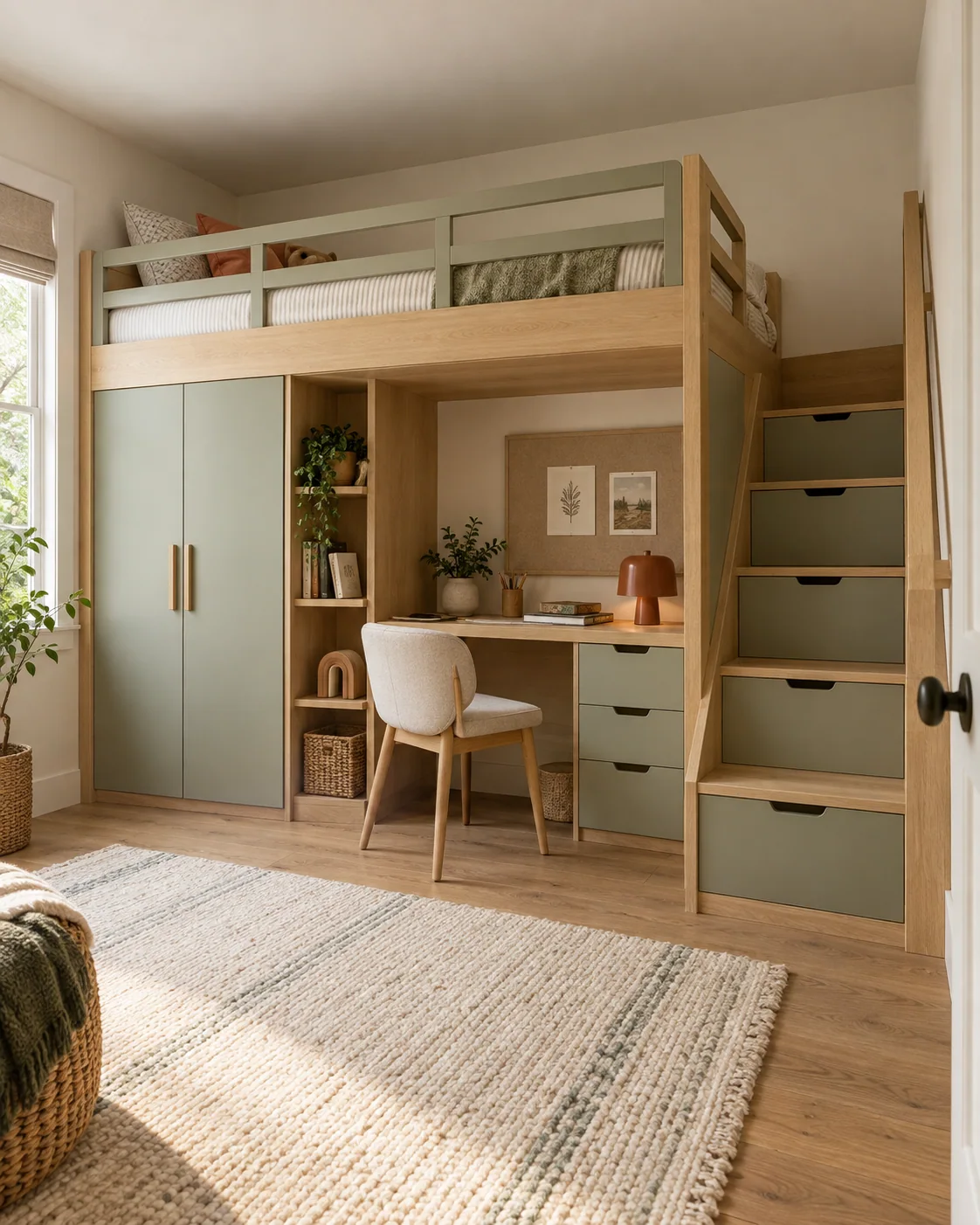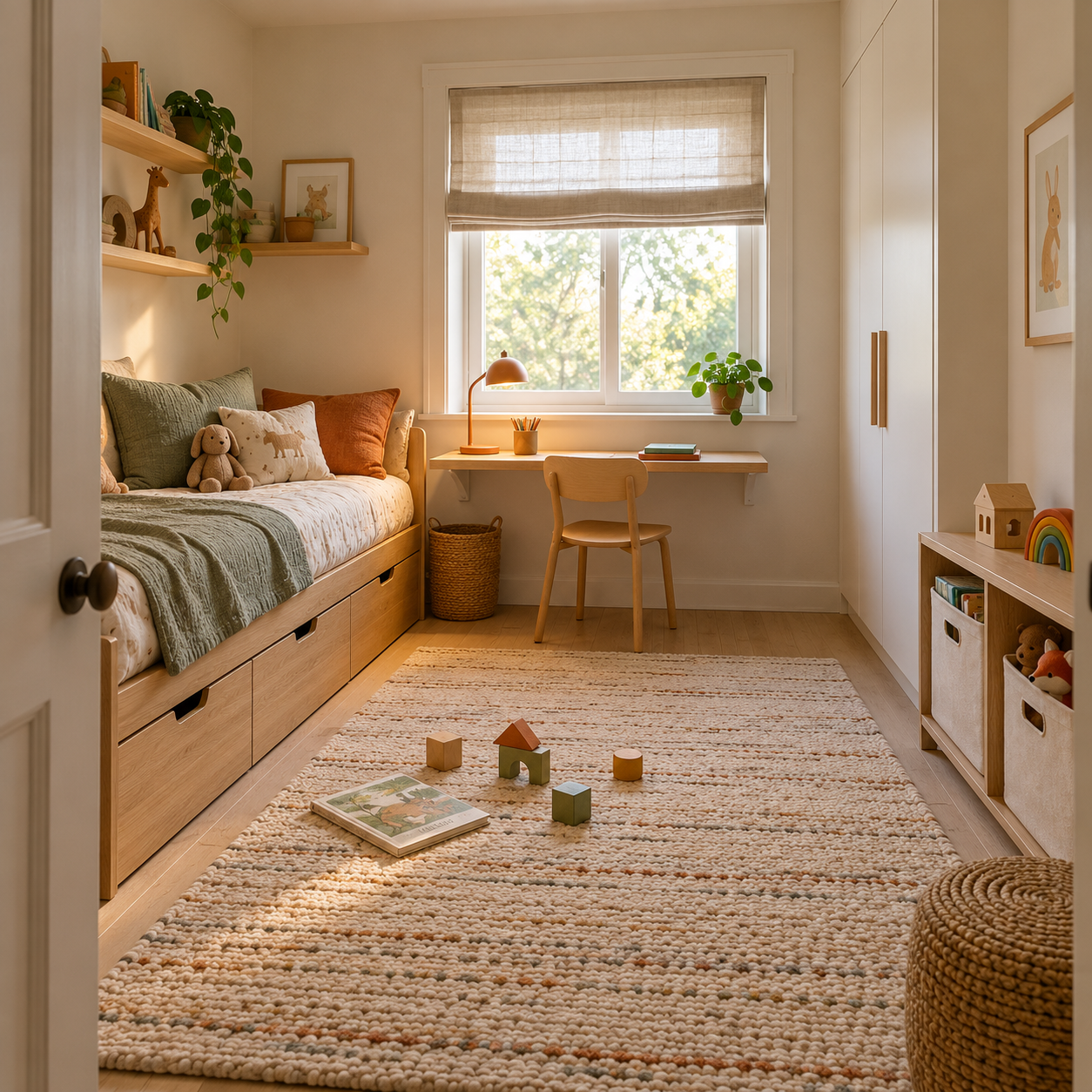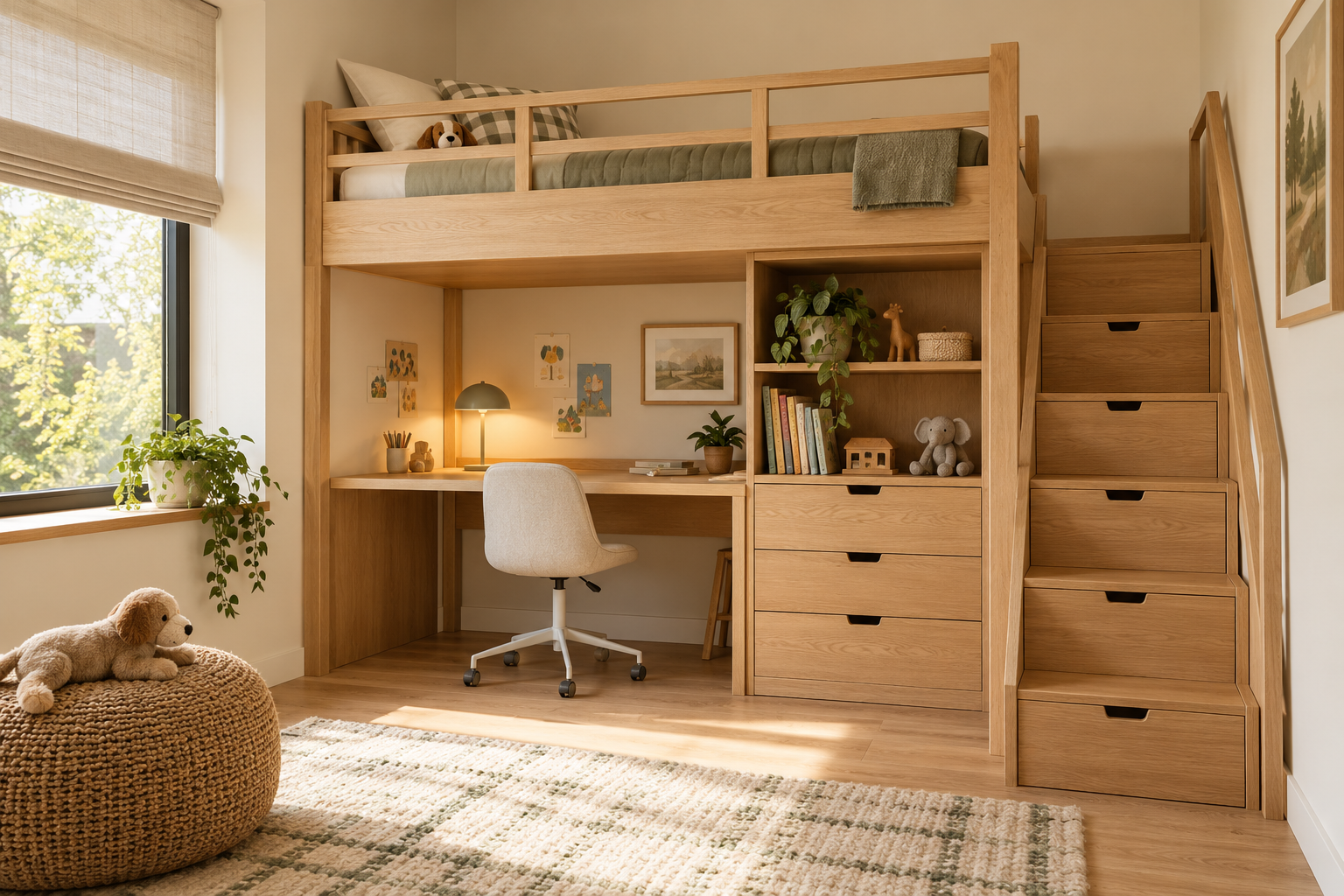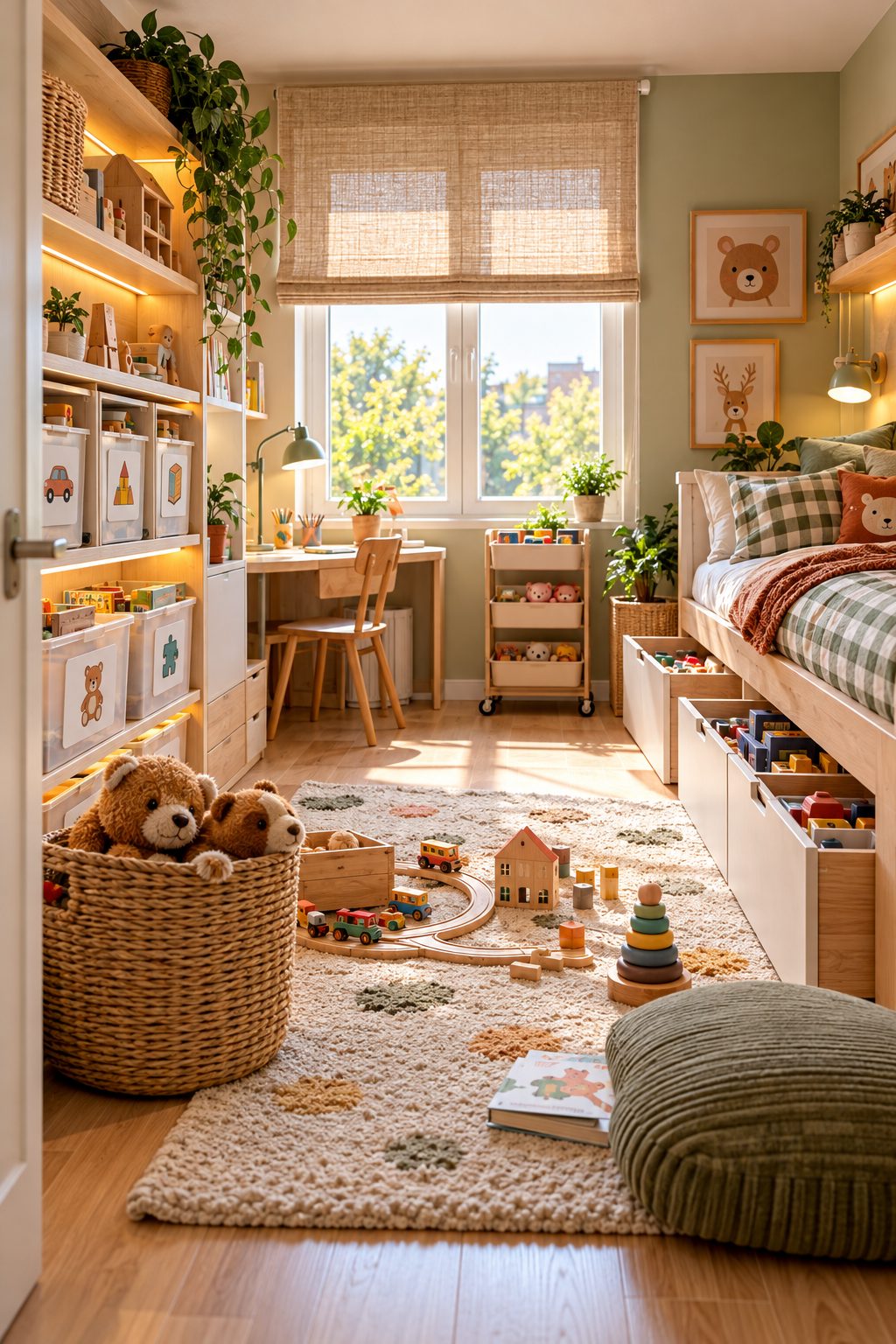
A toy rotation is an inventory system, not a rule that every toy must disappear on a calendar day. In a small kids' bedroom, keep a manageable active set within the room, store the reserve safely, and swap only when the current set no longer fits the child's play or the room's reset routine. This protects floor space without asking you to buy more containers.
The quick setup
- Photograph the room and list every toy before sorting.
- Remove recalled, broken, incomplete, or outgrown items first.
- Keep favorites and current projects in the active set.
- Put the reserve in labeled, closed storage that adults can check.
- Rotate one category at a time when a real signal appears: boredom, clutter, a finished project, or a seasonal change.
What toy rotation means in a small room
The active set is what can be reached and reset in the room today. The reserve is the remainder, stored outside the play path. A current project can stay out even if it is not part of a category. This distinction prevents the common mistake of treating every toy as a daily-access toy.
Rotation is also different from a storage buying guide. If you need exact product comparisons, see our best kids' room storage guide. If the main issue is placement around sleep, study, and play, use the small kids' room storage-zone layout.
Start with the room's real capacity
Measure the shelf, drawer, or low cabinet that will hold the active set. Count usable compartments rather than the advertised capacity, and leave enough empty space for a child to return items without forcing lids or bins. Keep the route to the bed, door, and wardrobe clear.
Use a temporary test: place the proposed active toys in the space for one day. If the floor path narrows or the container has to be overfilled, the active set is too large. Reduce the set before adding another organizer.
Sort before you choose categories
Make four piles on the floor or a table:
- Keep active: favorites and toys used often.
- Keep in reserve: safe toys that are not needed every day.
- Current project: a puzzle, model, artwork, or build that needs continuity.
- Review or remove: broken, incomplete, recalled, outgrown, or no-longer-used items.
Do not use the reserve as a hiding place for a safety problem. Check age guidance and the condition of every toy before it returns to storage.
Choose categories a child can recognize
Use broad groups that match how the toys are actually used: building, pretend play, vehicles, books, art, puzzles, or soft toys. Avoid categories that require an adult to remember a complicated filing system. One picture label or one clear word per bin is usually enough.
Keep a favorite toy accessible even if it technically belongs to a larger category. The goal is an obvious reset, not a perfect inventory database.
Build the first active set
Choose one or two items from each category only after checking the available compartments. Leave room for the current project and for a small amount of natural mess. A useful first set might be:
| Zone | What belongs | Access |
|---|---|---|
| Open shelf | favorites and one choice from each active category | child-reachable |
| Low bin | larger building or pretend-play pieces | child-reachable, labeled |
| Work surface | one current project | visible, protected from cleanup |
| Closed reserve | safe, inactive categories | adult-checked access |
This map keeps the active set visible while preventing the reserve from taking over the room.
Store the reserve safely
Label each reserve container with its category and the date it was checked. Store heavy items low and keep cords, straps, small loose parts, and battery-powered toys where the child cannot access them without an adult check when appropriate. Do not stack unstable bins in a route or place a heavy container where it can fall.
If a storage piece has a lid, confirm that it cannot create a pinch or entrapment hazard. Anchor tall furniture according to the manufacturer's instructions. A reserve that is difficult to inspect is not a useful reserve; leave enough access for an adult to review it without climbing or moving a heavy stack.
Rotate by signals, not a rigid schedule
There is no universal weekly number that works for every child or room. Use observable signals instead:
- the active shelf no longer resets without overflow;
- a current project is finished;
- the child repeatedly asks for a stored category;
- a seasonal activity becomes relevant;
- a safety check shows that an item should be removed.
Swap one category at a time. Photograph the active shelf before the change, remove the least-used category, and bring out only what fits the same footprint. Keep favorites and unfinished projects in place unless there is a safety reason to move them.
Make the reset easy to repeat
Show where each category returns with a word label or simple photo. Use one open basket for fast returns, then sort it during the adult reset. If the reset takes several minutes every time, simplify the categories or reduce the number of active items.
The best system is the smallest one that can be understood and restored after a normal day. Test it for a week, then change one variable: category size, label, container, or reserve location.
Three small-room rotation setups
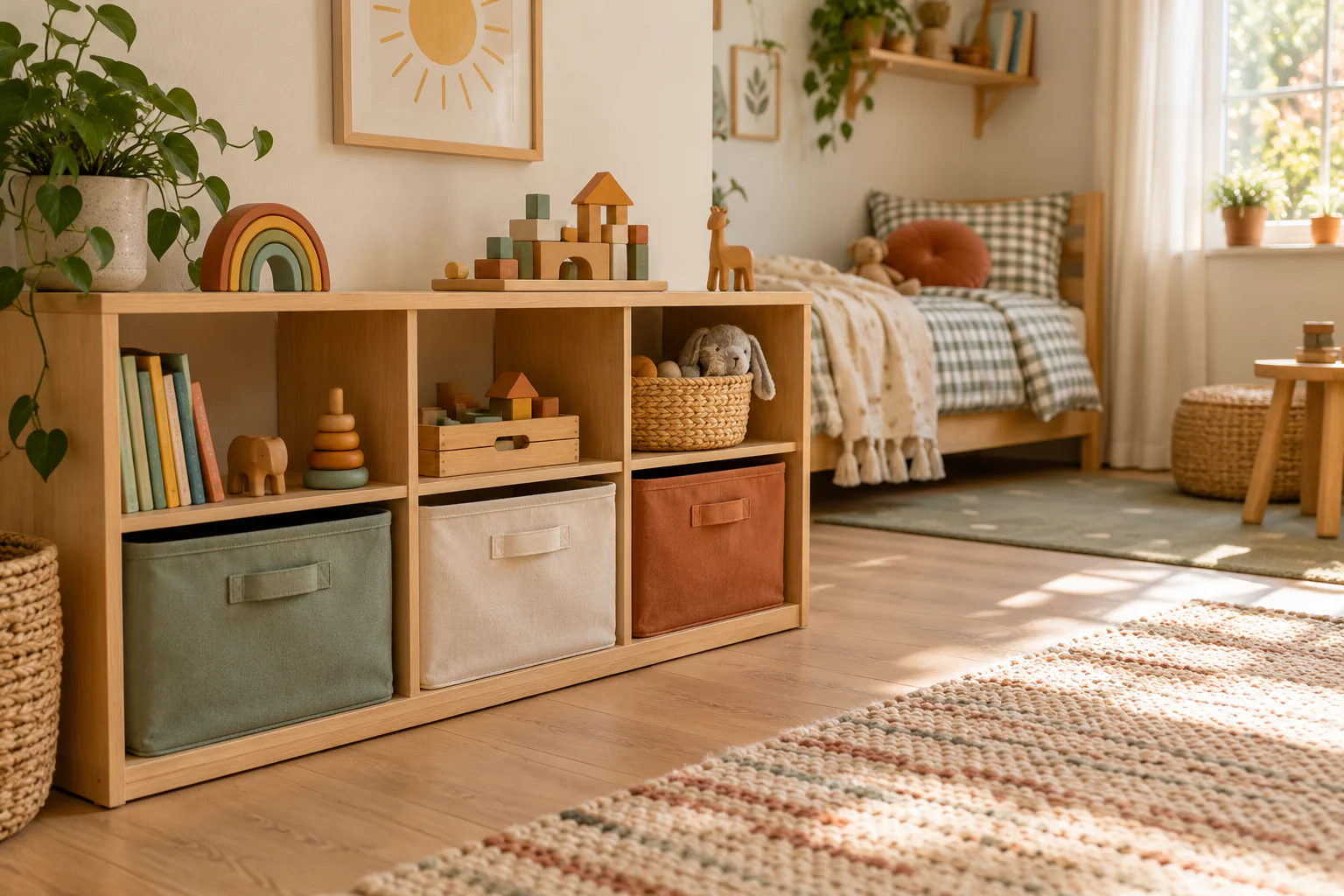
One low shelf
Use each cubby for one broad category and keep the top surface for the current project. Reserve toys stay in a labeled closet bin. This works when the child can reach the shelf without climbing.
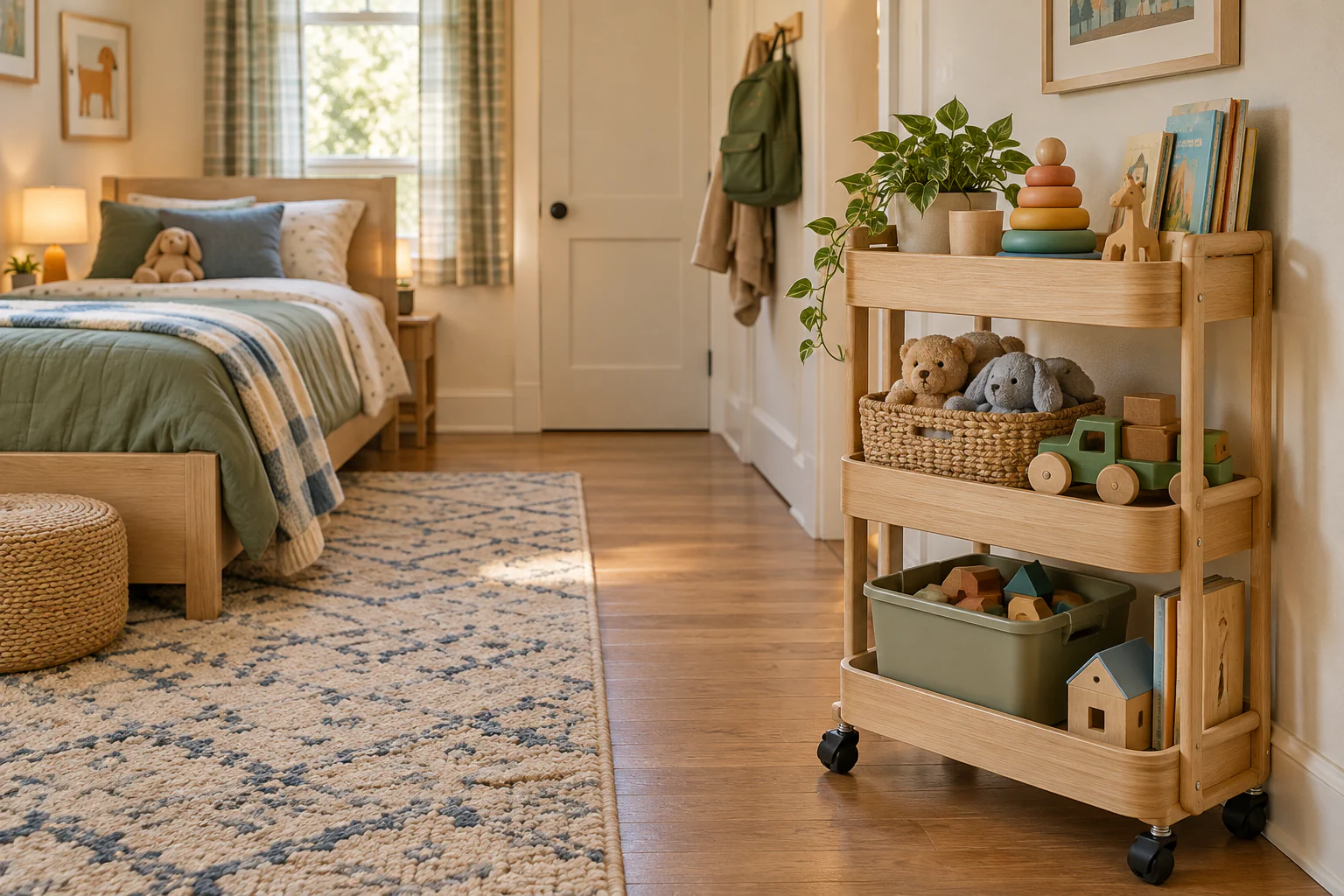
One rolling cart
Assign one level to books or art, one to building, and one to pretend play. Park the cart against a wall when the room needs a clear play path. Lock the wheels if the model includes brakes, and avoid loading it so heavily that it tips.
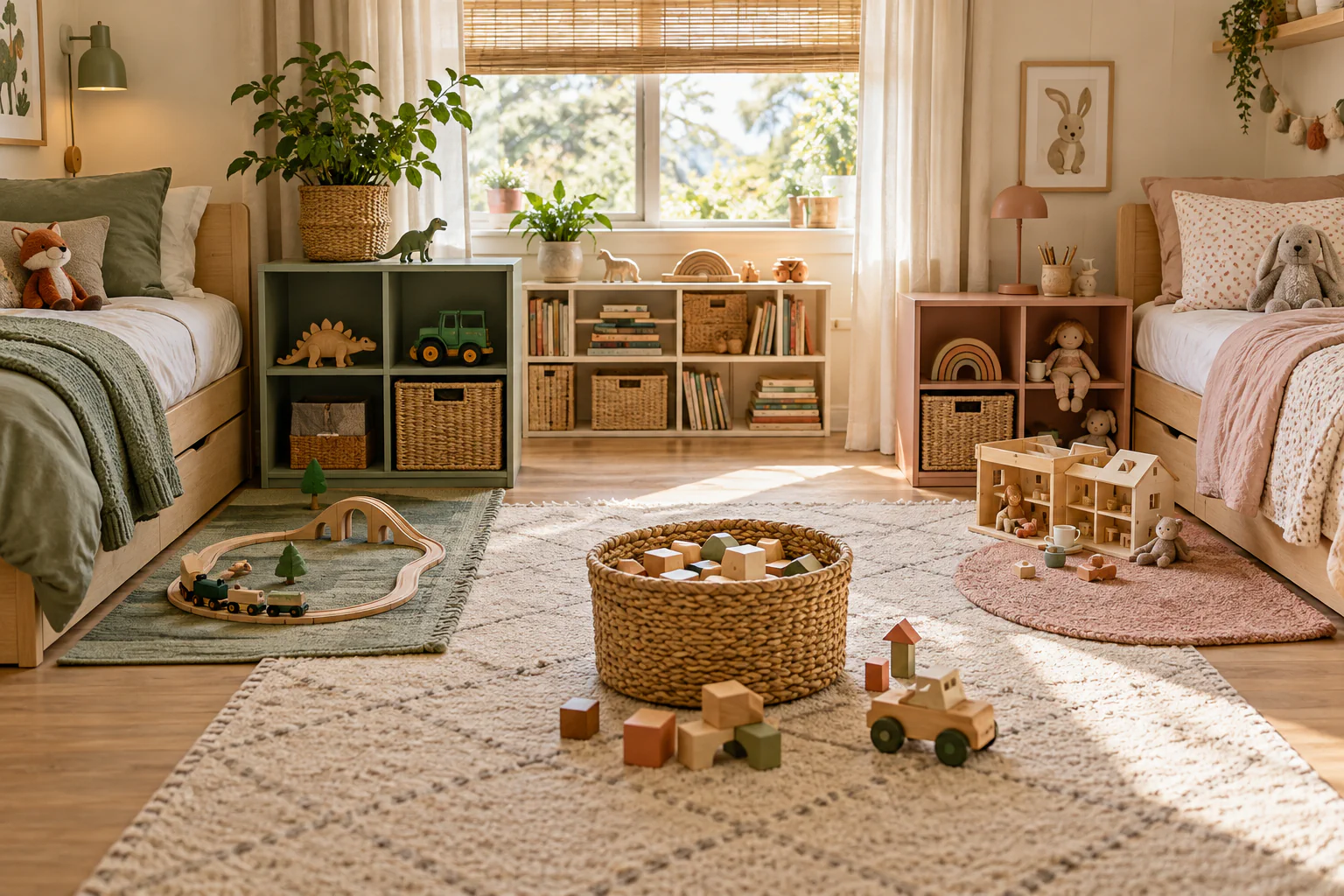
Shared bedroom
Give each child a named active zone and one shared category such as blocks or dress-up. Keep personal favorites separate, then rotate the shared category only when both children can reset it safely. For broader zoning ideas, see separate zones for a shared kids' room.
Safety check before every swap
Use the CPSC Toy Safety guidance for age labels and small-parts requirements. Search the CPSC Recalls database when an item is unfamiliar or has been stored for a long time. Remove toys with loose parts, sharp breaks, damaged cords, or inaccessible battery compartments.
Take extra care with products containing button or coin batteries; the CPSC battery guidance says compartments should be secured and damaged products should be repaired or discarded. Keep loose high-powered magnets away from children and review the CPSC magnet safety guidance before storing magnetic sets.
Common mistakes
- Rotating everything at once and losing track of favorites.
- Choosing categories that only an adult understands.
- Filling every bin until returns become difficult.
- Moving a current project into the reserve mid-use.
- Keeping recalled or damaged toys because they are “only in storage.â€
- Adding furniture before testing the active set's footprint.
A 20-minute starter workflow
Set a timer for five minutes to photograph and list the toys. Spend five minutes on the safety and condition review. Use the next five minutes to choose the active categories and label the reserve. Finish by placing the active set, clearing the walking path, and writing the date on the reserve label. Revisit the setup after real use instead of trying to perfect it in one session.
AptNook Tips
- Photograph the active shelf before each swap so you can restore the setup quickly.
- Keep a favorite or unfinished project out unless there is a safety reason to remove it.
- Label every reserve bin with its contents and the date of the last check.
- Screen returning toys for damage, missing parts, age fit, and current recalls.
- Rotate only what fits safely in the existing active footprint.

David
Head of Editorial — AptNook
David oversees AptNook's editorial workflow, coordinating research, writing, and quality reviews to help readers make informed decisions about space-saving furniture and small-room solutions.